We had a very productive and exciting day today!
We began the day with everyone introducing themselves. Students shared where they are from, their hobbies, and why they are interested in neuroscience. Then we discussed what kind of approach and attitudes we may adopt towards this course. Specifically, we talked about the idea of a zero-sum game (where one wins by causing others to lose), and how learning is not a zero-sum game, because learning is about sharing knowledge. Also, everyone has a different style and pace in learning and life, so nobody is early or late. We are perfectly on time in our own time zone.
Then we moved on to the “biology” part of “neurobiology”. When asked what our body can do that makes us “human,” student responses to this question were so inspirational and knowledgeable. They provided great answers like movement, emotions, seeing, hearing, and thinking. These answers brought us right into the four main functions of our nervous system. Many videos were shown to help our students understand some specific functions better. Students discussed how our senses work like sensors in a machine, and how our muscles (or more accurately, the motor neurons) work like actuators. We also learned about a condition named locked-in syndrome, which occurs when an information transmission pathway is broken. Another topic that was explored was the effects of differences in development, including to include that premature babies can’t regulate their body temperature or blood oxygen yet, so they need to live in an incubator.
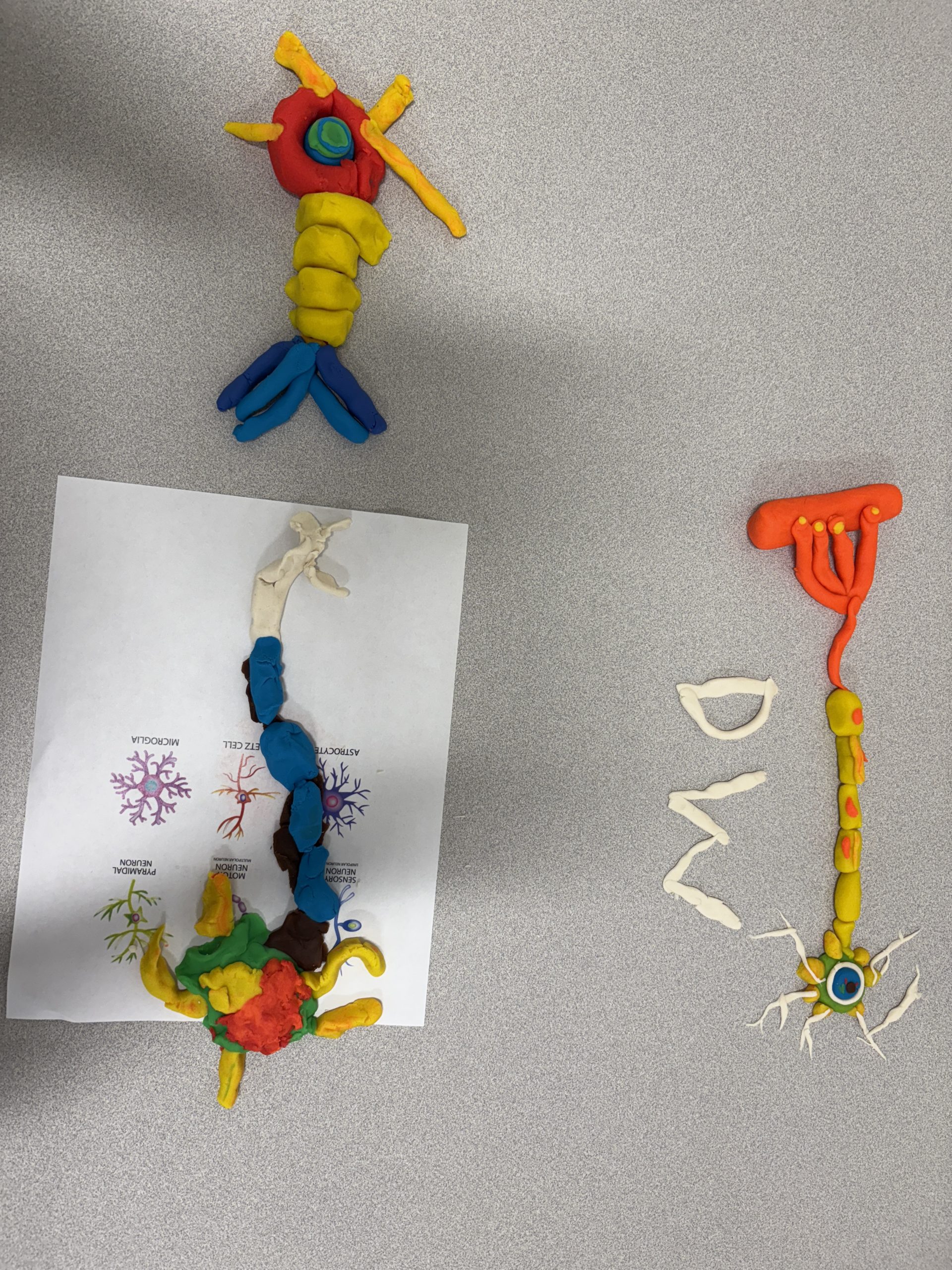
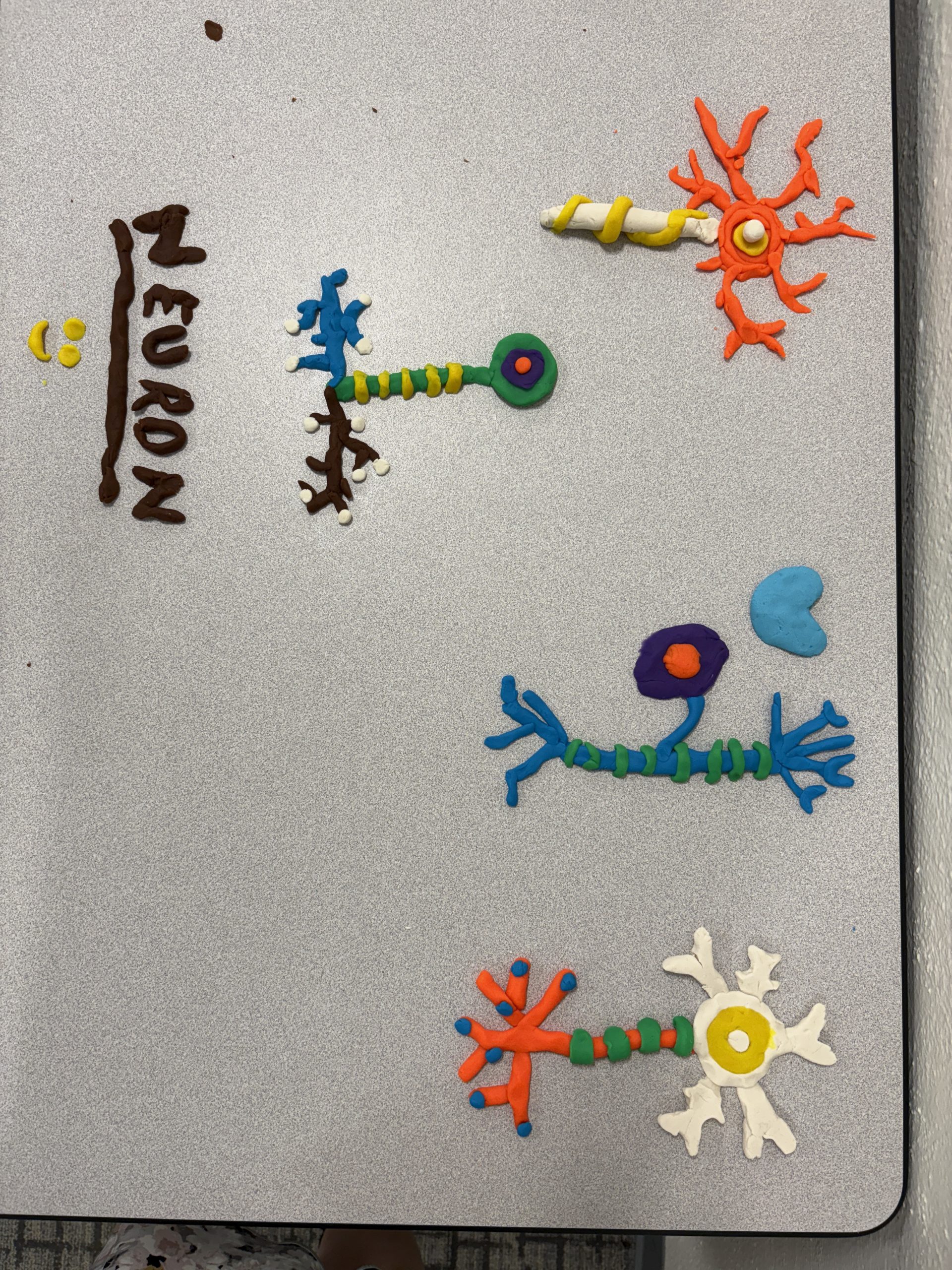
We began the next topic (how neurons transmit information in our body) with a fun game of telephone. A student read a sentence on a piece of paper and relayed this information all the way to the 16th student. Following that activity, we delved into the structure of neurons and made neurons using Play-Doh. Our students were so creative that they made all kinds of elaborate and anatomically appropriate neurons.
Our last topic for the day was how neurons communicate with each other. We watched a video about Morse code to help us understand a more abstract form of communication. We also got to see animations of action potentials (how information is transmitted across neurons). Then we had a group project focusing on a specific part of the neuron – the myelin sheath, which helps neurons transmit information better. Our students went to a computer lab to research a disease that results from losing the myelin sheath. Our groups made good progress working on creating presentations based on their research. Tomorrow morning, we will start our session in a computer lab, and then the groups will present their findings to the class!